Education

Georgia Southern University Turns to Reusable Containers to Reduce Waste and Save Money

When Georgia Southern launched its first-ever reusable container program in spring 2025, the results exceeded expectations. Fast forward to today, and they’ve achieved a 99% return rate, savings of nearly $34,000, and have kept over 87,000 single-use containers out of landfills.

About customer

99%
return rate
$33.5K
savings
Thank you! Your submission has been received!
Oops! Something went wrong while submitting the form.
Ready to rethink waste?
Stay up to date on our product updates, new case studies, latest blogs, upcoming events, and more.
Thank you! Your submission has been received!
Oops! Something went wrong while submitting the form.

Key Results

In the first nine months with ReusePass, Georgia Southern University:

  • Achieved a 99% return rate
  • Saved $33,546
  • Had 3,565 new user signups
  • Completed 87,604 returns
“The transition has been smooth, and we’ve seen strong benefits from moving to reusables. Since this was already a priority for us, we were excited to move forward quickly and begin reducing our reliance on single-use containers.”

- Michael Doyle, Assistant Director of Armstrong Dining Operations

Introduction

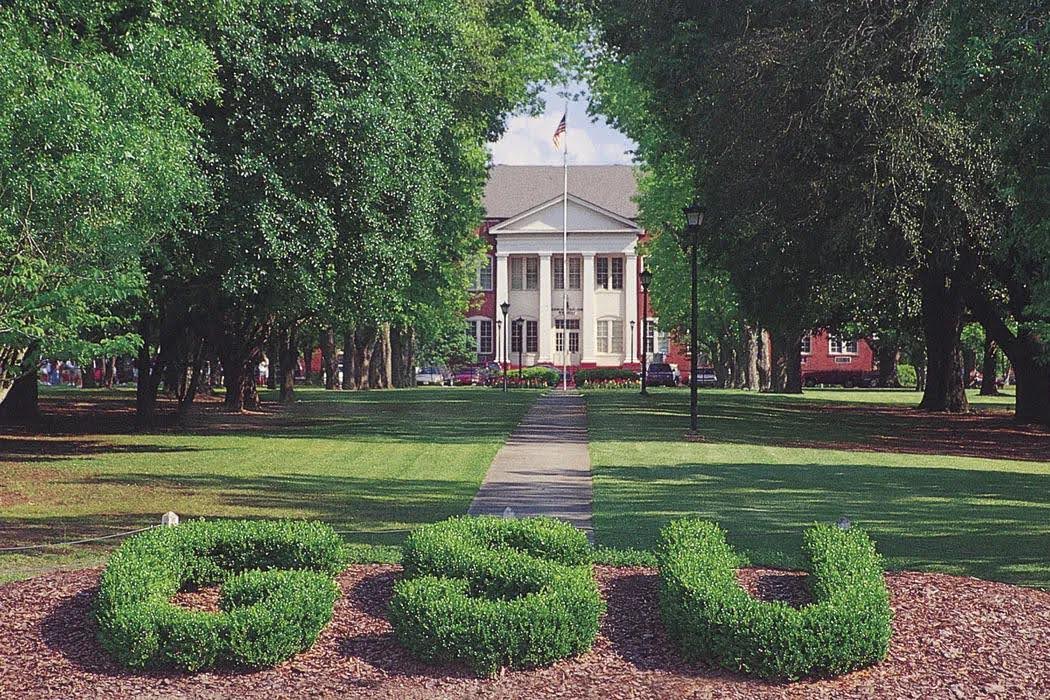
Georgia Southern University is a public research university in Georgia with over 26,000 students. Like many universities across the US, Georgia Southern knows its campus and community have a role to play in building a more sustainable future.

Through its Sustain Southern initiative, the university champions sustainable campus practices and funds on-the-ground improvements, putting over $1.1 million towards campus sustainability projects since 2024. For the dining team, that commitment meant taking a hard look at single-use containers.

Problem

Georgia Southern recognized an opportunity to rethink its use of single-use containers. “At one point, we were going through 100,000 Styrofoam disposable containers each semester,” said Michael Doyle, Assistant Director of Armstrong Dining Operations. With a strong commitment to sustainability, the team set out to find a solution that would better support both environmental goals and long-term cost savings. “We wanted something that allowed us to be more sustainable, both environmentally and financially,” Michael said.

Solution

Georgia Southern approached its first reusable container program with a clear vision and a focus on long-term success. The dining team identified key priorities early and selected ReusePass as the partner best aligned with their goals after evaluating several options.

Michael Doyle, Assistant Director of Armstrong Dining Operations, highlighted the program’s flexibility as a major advantage. “We wanted a solution that offered flexibility in container options while remaining simple and intuitive for both our team and the campus community.”

With a large residential dining operation, operational efficiency was essential. Features like single sign-on and back-of-house RFID scanners supported a streamlined process for staff. “It was important for us to create an experience that allowed our team to stay focused on serving students,” Michael said.

ReusePass delivered on each of these priorities, providing a solution that fit seamlessly into Georgia Southern’s dining operations.

Program Design and Setup

Georgia Southern introduced ReusePass in three of its pay-to-enter residential dining halls across two campuses: Statesboro and Armstrong in Savannah. The program was designed to be simple and easy to use: students have three days to return their container to a cashier, with an $8 late fee applied to support timely returns and keep the program running smoothly. This made getting genuine user buy-in all the more important.

Having the right program design in place was one thing. Getting the campus community behind it was another. Before launch, the dining team focused on getting buy-in from staff and students. That meant being hands-on from the very start. “We did some old school tabling and let the students touch the containers, open them and feel them,” Michael said. “We also did some Google polls and let them rate what their favorite, second favorite and least favorite containers were.”

The same containers then made the rounds with the dining team, who tested how they held up through a dishwasher cycle and shared what they’d actually want to work with every day. The university didn’t want any unpleasant surprises for anyone on launch day.

Michael explained that they also leaned on a key campus partner: Sustain Southern. “We partnered with Sustain Southern, who really made a lot of things happen, both with tabling and information being put out to students.” Having the university’s sustainability champions in the mix gave the program greater visibility across campus.

Program Launch

Georgia Southern prioritized an early launch to begin making an immediate impact. The team introduced ReusePass in March 2025 and implemented a thoughtful, phased rollout in the weeks leading up to spring break, allowing students and staff to become familiar with the program and ensuring a smooth transition.

By easing them into the changes, they hoped students would be more receptive. The soft launch involved offering students both Styrofoam and reusable containers side by side, helping interested students sign up for ReusePass, and working through any other hiccups as they came up.

By the time spring break arrived, students were familiar with the program and the dining team was fully prepared to manage the flow of containers with confidence. “We wanted to make sure it worked smoothly, so the first day back from spring break, we fully transitioned away from Styrofoam,” Michael said.

The phased rollout achieved exactly what it was designed to do, setting the stage for a seamless transition. “The program has been a great success. We’ve seen strong benefits, and since reusables were already a priority for us, we were excited to move forward and begin making an immediate impact,” Michael added.

Results

The team at Georgia Southern was surprised to see how strong student buy-in really was. “They very quickly got with the program,” Michael said. “Most students are going to be excited about the fact that they’re not just throwing away these containers, they’re bringing them back.”

The return rates reinforced the program’s success. From the outset, the team prioritized strong participation and thoughtful program design to support consistent container returns. Clear expectations and a structured return process helped maintain inventory and keep the program running smoothly.

Michael and the dining team didn’t know it then, but it was all going to work out even better than they expected. A few months after the program went live, Michael explored the program’s success during our Reuse IRL webinar. He explained that, just 3 months into the program, the container return rate was already at 97%, and 41.6k rentals had been completed. “We were really pleasantly surprised with how easy it was for students to make it happen and bring them back,” Michael said.

The numbers reveal that students are very much on board with ReusePass. Since the launch in March 2025:

  • The return rate is now 99%
  • 6,133 users have signed up, and the top user completed 219 rentals
  • 87,604 returns have been made, with the most-used container completing 99 rentals

The cost and waste reduction impact didn’t disappoint, either:

  • 87,130 single-use containers saved from landfill
  • 56,585 gallons of water saved
  • 58,735 lbs of GHG CO2e saved
  • $33,546 saved

For a university running a reusable container program for the very first time, those results are impressive, and Georgia Southern has made sure the story doesn’t go untold. Michael gave a guest lecture on ReusePass and its positive environmental impact to a campus class last fall. All of us at Topanga were excited to learn that the university also featured ReusePass at one of its museums, highlighting climate change and the program’s impact.

In less than a year, Georgia Southern went from 100,000 single-use Styrofoam containers per semester to a 99% reusable container return rate, almost $34,000 saved, and a museum exhibit celebrating the change. What began as an opportunity to enhance sustainability has grown into a source of campus pride.

Name Surname
Position, Company name
Name Surname
Position, Company name

Interested in how Topanga could improve your dining program? Let’s chat.

We’ll walk you through how Topanga can support your goals and tailor a solution to fit your operation.

Thank you! Your submission has been received!
Oops! Something went wrong while submitting the form.

Learn More

Education

Georgia Southern University Turns to Reusable Containers to Reduce Waste and Save Money

When Georgia Southern launched its first-ever reusable container program in spring 2025, the results exceeded expectations. Fast forward to today, and they’ve achieved a 99% return rate, savings of nearly $34,000, and have kept over 87,000 single-use containers out of landfills.

Be the first to know about upcoming webinars

Get notified about future sessions featuring expert insights, real-world success stories, and practical tips for running a more sustainable dining program and kitchen.

Thank you! Your submission has been received!
Oops! Something went wrong while submitting the form.

About this webinar

Key Results

In the first nine months with ReusePass, Georgia Southern University:

  • Achieved a 99% return rate
  • Saved $33,546
  • Had 3,565 new user signups
  • Completed 87,604 returns
“The transition has been smooth, and we’ve seen strong benefits from moving to reusables. Since this was already a priority for us, we were excited to move forward quickly and begin reducing our reliance on single-use containers.”

- Michael Doyle, Assistant Director of Armstrong Dining Operations

Introduction

Georgia Southern University is a public research university in Georgia with over 26,000 students. Like many universities across the US, Georgia Southern knows its campus and community have a role to play in building a more sustainable future.

Through its Sustain Southern initiative, the university champions sustainable campus practices and funds on-the-ground improvements, putting over $1.1 million towards campus sustainability projects since 2024. For the dining team, that commitment meant taking a hard look at single-use containers.

Problem

Georgia Southern recognized an opportunity to rethink its use of single-use containers. “At one point, we were going through 100,000 Styrofoam disposable containers each semester,” said Michael Doyle, Assistant Director of Armstrong Dining Operations. With a strong commitment to sustainability, the team set out to find a solution that would better support both environmental goals and long-term cost savings. “We wanted something that allowed us to be more sustainable, both environmentally and financially,” Michael said.

Solution

Georgia Southern approached its first reusable container program with a clear vision and a focus on long-term success. The dining team identified key priorities early and selected ReusePass as the partner best aligned with their goals after evaluating several options.

Michael Doyle, Assistant Director of Armstrong Dining Operations, highlighted the program’s flexibility as a major advantage. “We wanted a solution that offered flexibility in container options while remaining simple and intuitive for both our team and the campus community.”

With a large residential dining operation, operational efficiency was essential. Features like single sign-on and back-of-house RFID scanners supported a streamlined process for staff. “It was important for us to create an experience that allowed our team to stay focused on serving students,” Michael said.

ReusePass delivered on each of these priorities, providing a solution that fit seamlessly into Georgia Southern’s dining operations.

Program Design and Setup

Georgia Southern introduced ReusePass in three of its pay-to-enter residential dining halls across two campuses: Statesboro and Armstrong in Savannah. The program was designed to be simple and easy to use: students have three days to return their container to a cashier, with an $8 late fee applied to support timely returns and keep the program running smoothly. This made getting genuine user buy-in all the more important.

Having the right program design in place was one thing. Getting the campus community behind it was another. Before launch, the dining team focused on getting buy-in from staff and students. That meant being hands-on from the very start. “We did some old school tabling and let the students touch the containers, open them and feel them,” Michael said. “We also did some Google polls and let them rate what their favorite, second favorite and least favorite containers were.”

The same containers then made the rounds with the dining team, who tested how they held up through a dishwasher cycle and shared what they’d actually want to work with every day. The university didn’t want any unpleasant surprises for anyone on launch day.

Michael explained that they also leaned on a key campus partner: Sustain Southern. “We partnered with Sustain Southern, who really made a lot of things happen, both with tabling and information being put out to students.” Having the university’s sustainability champions in the mix gave the program greater visibility across campus.

Program Launch

Georgia Southern prioritized an early launch to begin making an immediate impact. The team introduced ReusePass in March 2025 and implemented a thoughtful, phased rollout in the weeks leading up to spring break, allowing students and staff to become familiar with the program and ensuring a smooth transition.

By easing them into the changes, they hoped students would be more receptive. The soft launch involved offering students both Styrofoam and reusable containers side by side, helping interested students sign up for ReusePass, and working through any other hiccups as they came up.

By the time spring break arrived, students were familiar with the program and the dining team was fully prepared to manage the flow of containers with confidence. “We wanted to make sure it worked smoothly, so the first day back from spring break, we fully transitioned away from Styrofoam,” Michael said.

The phased rollout achieved exactly what it was designed to do, setting the stage for a seamless transition. “The program has been a great success. We’ve seen strong benefits, and since reusables were already a priority for us, we were excited to move forward and begin making an immediate impact,” Michael added.

Results

The team at Georgia Southern was surprised to see how strong student buy-in really was. “They very quickly got with the program,” Michael said. “Most students are going to be excited about the fact that they’re not just throwing away these containers, they’re bringing them back.”

The return rates reinforced the program’s success. From the outset, the team prioritized strong participation and thoughtful program design to support consistent container returns. Clear expectations and a structured return process helped maintain inventory and keep the program running smoothly.

Michael and the dining team didn’t know it then, but it was all going to work out even better than they expected. A few months after the program went live, Michael explored the program’s success during our Reuse IRL webinar. He explained that, just 3 months into the program, the container return rate was already at 97%, and 41.6k rentals had been completed. “We were really pleasantly surprised with how easy it was for students to make it happen and bring them back,” Michael said.

The numbers reveal that students are very much on board with ReusePass. Since the launch in March 2025:

  • The return rate is now 99%
  • 6,133 users have signed up, and the top user completed 219 rentals
  • 87,604 returns have been made, with the most-used container completing 99 rentals

The cost and waste reduction impact didn’t disappoint, either:

  • 87,130 single-use containers saved from landfill
  • 56,585 gallons of water saved
  • 58,735 lbs of GHG CO2e saved
  • $33,546 saved

For a university running a reusable container program for the very first time, those results are impressive, and Georgia Southern has made sure the story doesn’t go untold. Michael gave a guest lecture on ReusePass and its positive environmental impact to a campus class last fall. All of us at Topanga were excited to learn that the university also featured ReusePass at one of its museums, highlighting climate change and the program’s impact.

In less than a year, Georgia Southern went from 100,000 single-use Styrofoam containers per semester to a 99% reusable container return rate, almost $34,000 saved, and a museum exhibit celebrating the change. What began as an opportunity to enhance sustainability has grown into a source of campus pride.

50%
Statistic goes here
50%
Statistic goes here
Upcoming
April 8, 2026 9:48 AM

Georgia Southern University Turns to Reusable Containers to Reduce Waste and Save Money

When Georgia Southern launched its first-ever reusable container program in spring 2025, the results exceeded expectations. Fast forward to today, and they’ve achieved a 99% return rate, savings of nearly $34,000, and have kept over 87,000 single-use containers out of landfills.

Speakers

Sign up to this event

Details of the live event will be shared via email

Thank you! Your submission has been received!
Oops! Something went wrong while submitting the form.

About customer

Key Results

In the first nine months with ReusePass, Georgia Southern University:

  • Achieved a 99% return rate
  • Saved $33,546
  • Had 3,565 new user signups
  • Completed 87,604 returns
“The transition has been smooth, and we’ve seen strong benefits from moving to reusables. Since this was already a priority for us, we were excited to move forward quickly and begin reducing our reliance on single-use containers.”

- Michael Doyle, Assistant Director of Armstrong Dining Operations

Introduction

Georgia Southern University is a public research university in Georgia with over 26,000 students. Like many universities across the US, Georgia Southern knows its campus and community have a role to play in building a more sustainable future.

Through its Sustain Southern initiative, the university champions sustainable campus practices and funds on-the-ground improvements, putting over $1.1 million towards campus sustainability projects since 2024. For the dining team, that commitment meant taking a hard look at single-use containers.

Problem

Georgia Southern recognized an opportunity to rethink its use of single-use containers. “At one point, we were going through 100,000 Styrofoam disposable containers each semester,” said Michael Doyle, Assistant Director of Armstrong Dining Operations. With a strong commitment to sustainability, the team set out to find a solution that would better support both environmental goals and long-term cost savings. “We wanted something that allowed us to be more sustainable, both environmentally and financially,” Michael said.

Solution

Georgia Southern approached its first reusable container program with a clear vision and a focus on long-term success. The dining team identified key priorities early and selected ReusePass as the partner best aligned with their goals after evaluating several options.

Michael Doyle, Assistant Director of Armstrong Dining Operations, highlighted the program’s flexibility as a major advantage. “We wanted a solution that offered flexibility in container options while remaining simple and intuitive for both our team and the campus community.”

With a large residential dining operation, operational efficiency was essential. Features like single sign-on and back-of-house RFID scanners supported a streamlined process for staff. “It was important for us to create an experience that allowed our team to stay focused on serving students,” Michael said.

ReusePass delivered on each of these priorities, providing a solution that fit seamlessly into Georgia Southern’s dining operations.

Program Design and Setup

Georgia Southern introduced ReusePass in three of its pay-to-enter residential dining halls across two campuses: Statesboro and Armstrong in Savannah. The program was designed to be simple and easy to use: students have three days to return their container to a cashier, with an $8 late fee applied to support timely returns and keep the program running smoothly. This made getting genuine user buy-in all the more important.

Having the right program design in place was one thing. Getting the campus community behind it was another. Before launch, the dining team focused on getting buy-in from staff and students. That meant being hands-on from the very start. “We did some old school tabling and let the students touch the containers, open them and feel them,” Michael said. “We also did some Google polls and let them rate what their favorite, second favorite and least favorite containers were.”

The same containers then made the rounds with the dining team, who tested how they held up through a dishwasher cycle and shared what they’d actually want to work with every day. The university didn’t want any unpleasant surprises for anyone on launch day.

Michael explained that they also leaned on a key campus partner: Sustain Southern. “We partnered with Sustain Southern, who really made a lot of things happen, both with tabling and information being put out to students.” Having the university’s sustainability champions in the mix gave the program greater visibility across campus.

Program Launch

Georgia Southern prioritized an early launch to begin making an immediate impact. The team introduced ReusePass in March 2025 and implemented a thoughtful, phased rollout in the weeks leading up to spring break, allowing students and staff to become familiar with the program and ensuring a smooth transition.

By easing them into the changes, they hoped students would be more receptive. The soft launch involved offering students both Styrofoam and reusable containers side by side, helping interested students sign up for ReusePass, and working through any other hiccups as they came up.

By the time spring break arrived, students were familiar with the program and the dining team was fully prepared to manage the flow of containers with confidence. “We wanted to make sure it worked smoothly, so the first day back from spring break, we fully transitioned away from Styrofoam,” Michael said.

The phased rollout achieved exactly what it was designed to do, setting the stage for a seamless transition. “The program has been a great success. We’ve seen strong benefits, and since reusables were already a priority for us, we were excited to move forward and begin making an immediate impact,” Michael added.

Results

The team at Georgia Southern was surprised to see how strong student buy-in really was. “They very quickly got with the program,” Michael said. “Most students are going to be excited about the fact that they’re not just throwing away these containers, they’re bringing them back.”

The return rates reinforced the program’s success. From the outset, the team prioritized strong participation and thoughtful program design to support consistent container returns. Clear expectations and a structured return process helped maintain inventory and keep the program running smoothly.

Michael and the dining team didn’t know it then, but it was all going to work out even better than they expected. A few months after the program went live, Michael explored the program’s success during our Reuse IRL webinar. He explained that, just 3 months into the program, the container return rate was already at 97%, and 41.6k rentals had been completed. “We were really pleasantly surprised with how easy it was for students to make it happen and bring them back,” Michael said.

The numbers reveal that students are very much on board with ReusePass. Since the launch in March 2025:

  • The return rate is now 99%
  • 6,133 users have signed up, and the top user completed 219 rentals
  • 87,604 returns have been made, with the most-used container completing 99 rentals

The cost and waste reduction impact didn’t disappoint, either:

  • 87,130 single-use containers saved from landfill
  • 56,585 gallons of water saved
  • 58,735 lbs of GHG CO2e saved
  • $33,546 saved

For a university running a reusable container program for the very first time, those results are impressive, and Georgia Southern has made sure the story doesn’t go untold. Michael gave a guest lecture on ReusePass and its positive environmental impact to a campus class last fall. All of us at Topanga were excited to learn that the university also featured ReusePass at one of its museums, highlighting climate change and the program’s impact.

In less than a year, Georgia Southern went from 100,000 single-use Styrofoam containers per semester to a 99% reusable container return rate, almost $34,000 saved, and a museum exhibit celebrating the change. What began as an opportunity to enhance sustainability has grown into a source of campus pride.

50%
Statistic goes here
50%
Statistic goes here